
Beneath the Surface: Five Cities, One December, and What Lies Underneath

I have a theory about travel. The best trips are not the ones that show you the most. They are the ones that make you look more carefully. This December trip through five of Europe's most extraordinary cities confirmed that theory in ways I am still turning over in my mind. From the ancient layered complexity of Istanbul to the raw and unflinching honesty of Berlin, every stop asked the same quiet question: how much are you willing to see? Here is what I found when I looked.
Istanbul
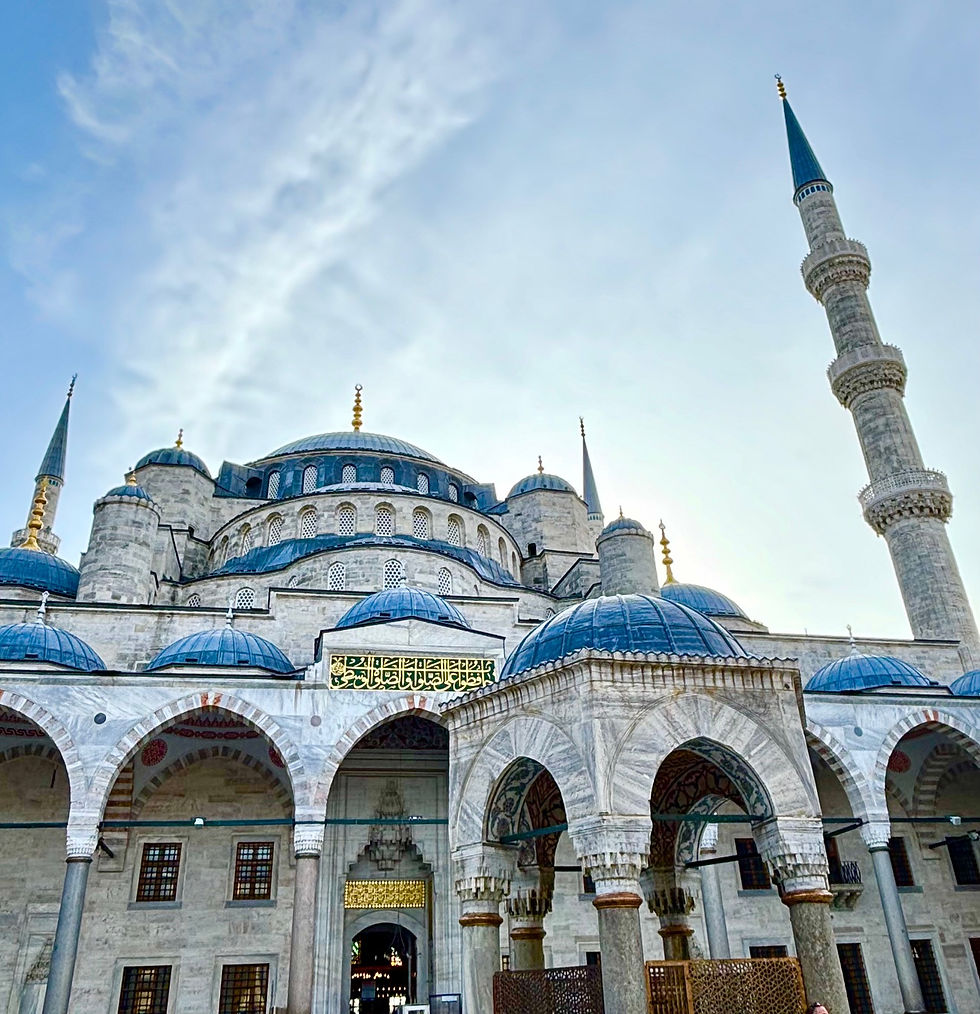
Nothing quite prepares you for Istanbul. I say that having traveled fairly widely and having learned not to oversell a destination to myself in advance. Istanbul broke through that defense completely. It is a city of staggering historical depth, a place where civilizations did not just pass through but piled on top of one another over thousands of years, each one leaving something indelible behind. Standing inside the Hagia Sophia, which has been a Greek Orthodox cathedral, a Roman Catholic cathedral, an Ottoman mosque, a museum, and a mosque again, you are standing inside a physical record of human history that very few places on earth can match. The city itself has that quality everywhere you turn. Ancient and modern, sacred and secular, European and Asian, all of it braided together into something that feels completely unlike anywhere else I have ever been. I left Istanbul feeling like I had only scratched the surface, which I suspect is exactly how it is supposed to feel.
Vienna

From Istanbul we made our way to Vienna, and the contrast was immediate and delicious. Where Istanbul is layered and labyrinthine, Vienna is grand and deliberate, a city that has always known exactly what it is and has never been shy about it. The art, the architecture, the coffee houses, the music. Vienna wears its cultural identity like a beautifully tailored coat. We spent time in the museums, lingered in the coffee houses the way Viennese people have been doing for centuries, and caught a classical performance that reminded me why live music does something to the human nervous system that no recording ever fully replicates. Vienna is a city that takes beauty seriously, and spending time there makes you take it more seriously too.
Bratislava
Bratislava was a day trip and an unexpected highlight. It is easy to underestimate as a destination, sandwiched between Vienna and Budapest and often treated as a footnote. But Bratislava has its own quiet charm, and it holds one of the most surprising and beautiful buildings I encountered on the entire trip. The Church of Saint Elizabeth, known simply as the Blue Church, is exactly what it sounds like. A small Art Nouveau church covered almost entirely in soft powder blue, from its facade to its roof to its interior details, like something from a dream or a children's illustration come to life. It stopped me completely. Sometimes the most extraordinary things are the ones nobody warned you about.
Prague
Prague is a city with a secret, and once you know it, you cannot unknow it. The city you walk through today, its famous medieval streets and Gothic towers and baroque facades, is not
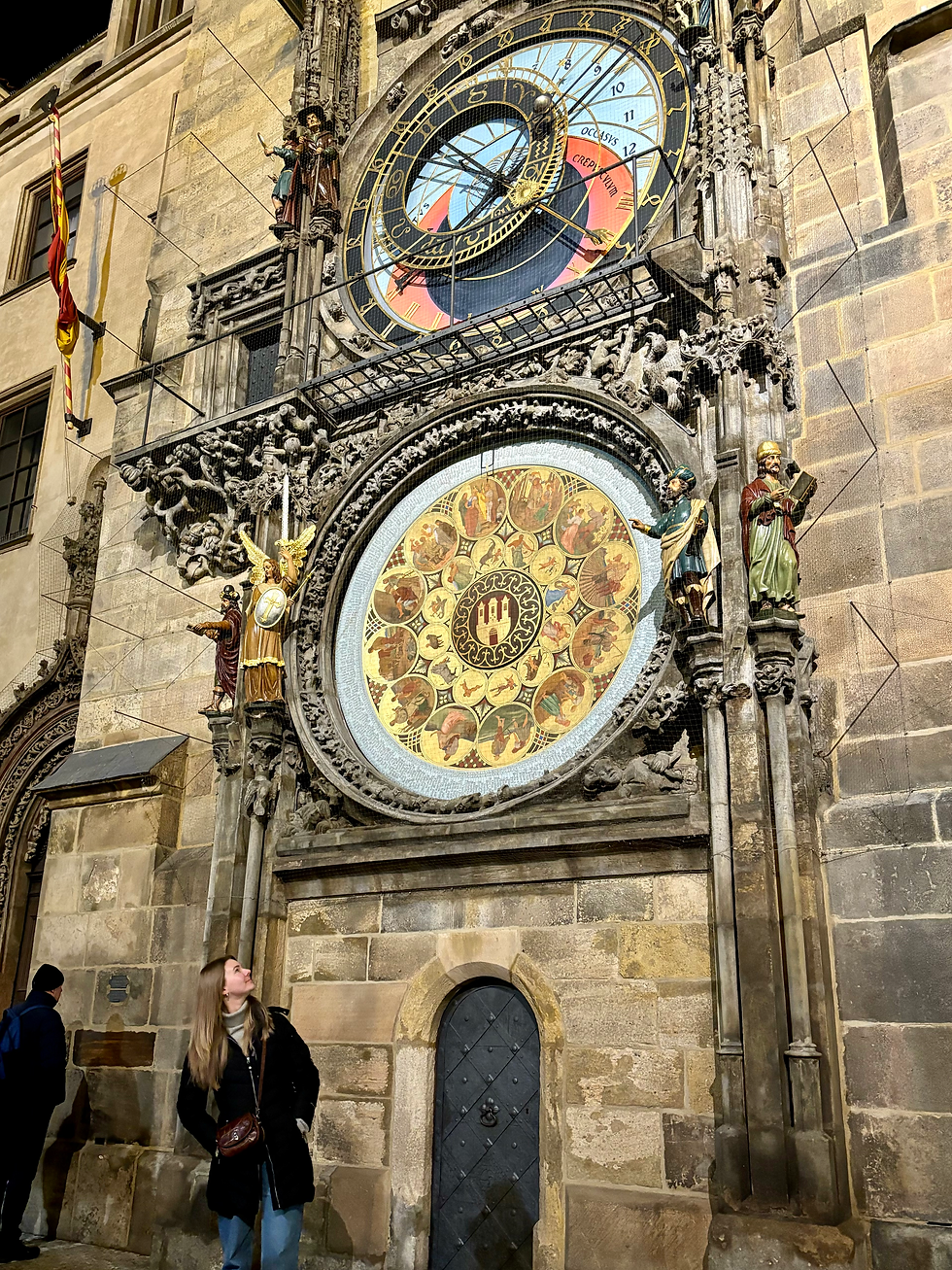
the original city. It is built on top of it. Centuries of catastrophic flooding along the Vltava River drove the city progressively upward, with each new layer of construction rising above the last until what had been ground floors became cellars and what had been cellars became something deeper still. There is an entire buried city underneath the one you are standing in. I found that almost unbearably fascinating, the idea that the surface of a place is never the whole story. The astronomical clock in the old town square, a medieval marvel of engineering that has been tracking time and the movement of celestial bodies since 1410, felt like the perfect symbol of all of it. Something intricate and beautiful and deeper than it first appears.
Berlin
Berlin saved the heaviest things for last. This is a city that does not look away from its own history, and there is something both sobering and quietly heroic about that. The reconstructed sections of the Wall, graffiti covered and fragmentary, standing now as monuments in a city that has grown up and around them, are a striking reminder of how recently and how dramatically this place was divided. But it was the Denkmal für die ermordeten Juden Europas, the Memorial to the Murdered Jews of Europe, that stayed with me most. It is a field of 2,711 concrete slabs of varying heights spread across a city block in the heart of Berlin, and walking through it is an experience that resists easy description. The slabs close in around you as you move deeper into the memorial, the ground undulates beneath your feet, and the sounds of the city gradually disappear. It is disorienting in a way that feels entirely intentional. You are meant to feel small and uncertain and alone. It is one of the most powerful things I have ever walked through.
What Five Cities Taught Me
I came home from this trip thinking about surfaces and what lies beneath them. Every city on this itinerary had something extraordinary to offer the casual visitor. But every one of them gave something deeper and more lasting to anyone willing to slow down and look more carefully. That is a lesson I try to carry into my work every single day. The students who surprise you, who turn out to be more capable and more complex and more interesting than a grade or a test score suggested, are everywhere. You just have to be willing to look beneath the surface to find them.


Comments